
SGE, Altra and GE Vernova Hitachi sign MoU to assess the prospects of small modular reactors in Lithuania
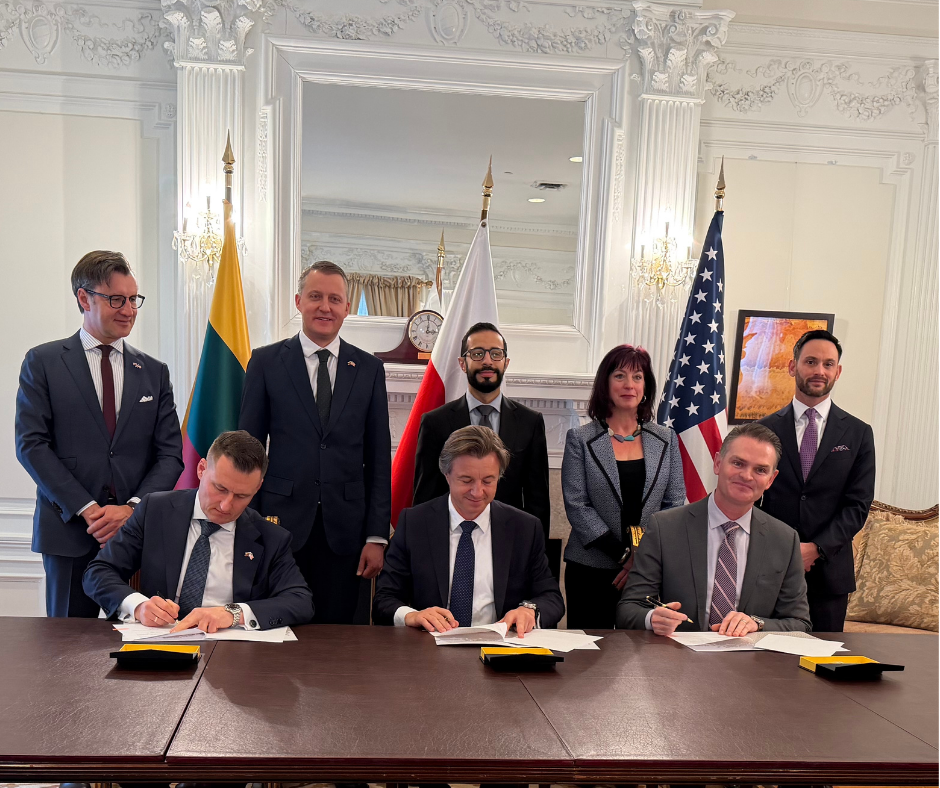
On February 25 in Washington, the Ignalina Nuclear Power Plant, operating under the name Altra, together with the U.S. company GE Vernova Hitachi Nuclear Energy (GVH) and SGE S.A. (SGE), signed a trilateral Memorandum of Understanding. The agreement provides for an assessment of opportunities to deploy advanced small modular reactor (SMR) technology – the BWRX-300 – in Lithuania. The Memorandum establishes a framework for a detailed assessment of the technical and economic feasibility of the potential implementation of this technology. The assessment will analyze technological solutions, safety and licensing requirements, as well as economic and market aspects. Lithuania’s Minister of Energy, Žygimantas Vaičiūnas, and representatives of the U.S. Department of Energy attended the signing of the Memorandum of Understanding. “This Memorandum provides an opportunity to bring together Lithuania’s nuclear energy experience, the expertise of Altra’s specialists, and the latest knowledge of U.S. partners developing advanced small modular reactor technologies to assess the applicability of next-generation small modular reactors in Lithuania. While the prospects of these technologies are still at the analysis stage, a systematic assessment will allow us to determine how such solutions could contribute to the country’s energy security, sustainability, and climate-neutral energy and economic goals. Renewable energy is and will remain Lithuania’s clear choice; however, to achieve full climate neutrality by 2050, we must also assess the potential of these technologies in Lithuania,” said Žygimantas Vaičiūnas. The CEO of Altra, Linas Baužys, noted that the Memorandum enables a consistent and responsible assessment of advanced nuclear technology potential in Lithuania. “We have nuclear energy experience and competencies that can be valuable when discussing next-generation solutions that strengthen national energy security and long-term system stability. In the context of a rapidly changing energy landscape, we must objectively assess various advanced technologies and their applicability in Lithuania. The BWRX-300 is one of the most advanced small modular reactor technologies currently under development, making it a natural option to analyze as part of future energy solutions,” said L. Baužys. BWRX-300 – an advanced SMR technology The BWRX-300 is an advanced small modular boiling water reactor being developed as a zero-carbon electricity generation solution. The technology is based on a simplified and standardised design, which is expected to shorten construction timelines, optimise costs, and ensure high safety standards. SGE, as a co-investor together with GVH, holds the exclusive rights to deploy the technology across much of Central and Eastern Europe and can provide access to the standard design, the Preliminary Safety Analysis Report (PSAR), and other documentation required for licensing and implementation. A reactor of this type is already under construction in Canada. “Lithuania’s energy transformation requires stable, zero-emission power that strengthens system security and supports long-term economic development,” said Rafał Kasprów, CEO of SGE. “The BWRX-300 Small Modular Reactor is designed to meet these needs, delivering safe, clean, reliable, affordable, and scalable nuclear energy based on decades of operating experience. By signing this Memorandum of Understanding, we are taking a structured step toward assessing the role of the BWRX-300 within Lithuania’s long-term energy framework.” The agreement was signed in the context of challenges facing the European energy sector, including the need to strengthen energy security, ensure new generation capacity to meet growing electricity demand, and deploy zero-emission solutions that enhance the stability of national energy systems. The development of small modular reactors is also aligned with the objectives of Lithuania’s National Energy Independence Strategy, which aims to make Lithuania fully energy-independent and climate-neutral by 2050. According to a 2025 Eurobarometer survey, 57% of Lithuania’s population view the prospects of nuclear energy positively over the next 20 years. Last year, the Ministry of Energy established a dedicated working group that includes representatives from Altra. The group is analyzing pathways for the application of advanced nuclear technologies and will assess their potential role within Lithuania’s energy system.