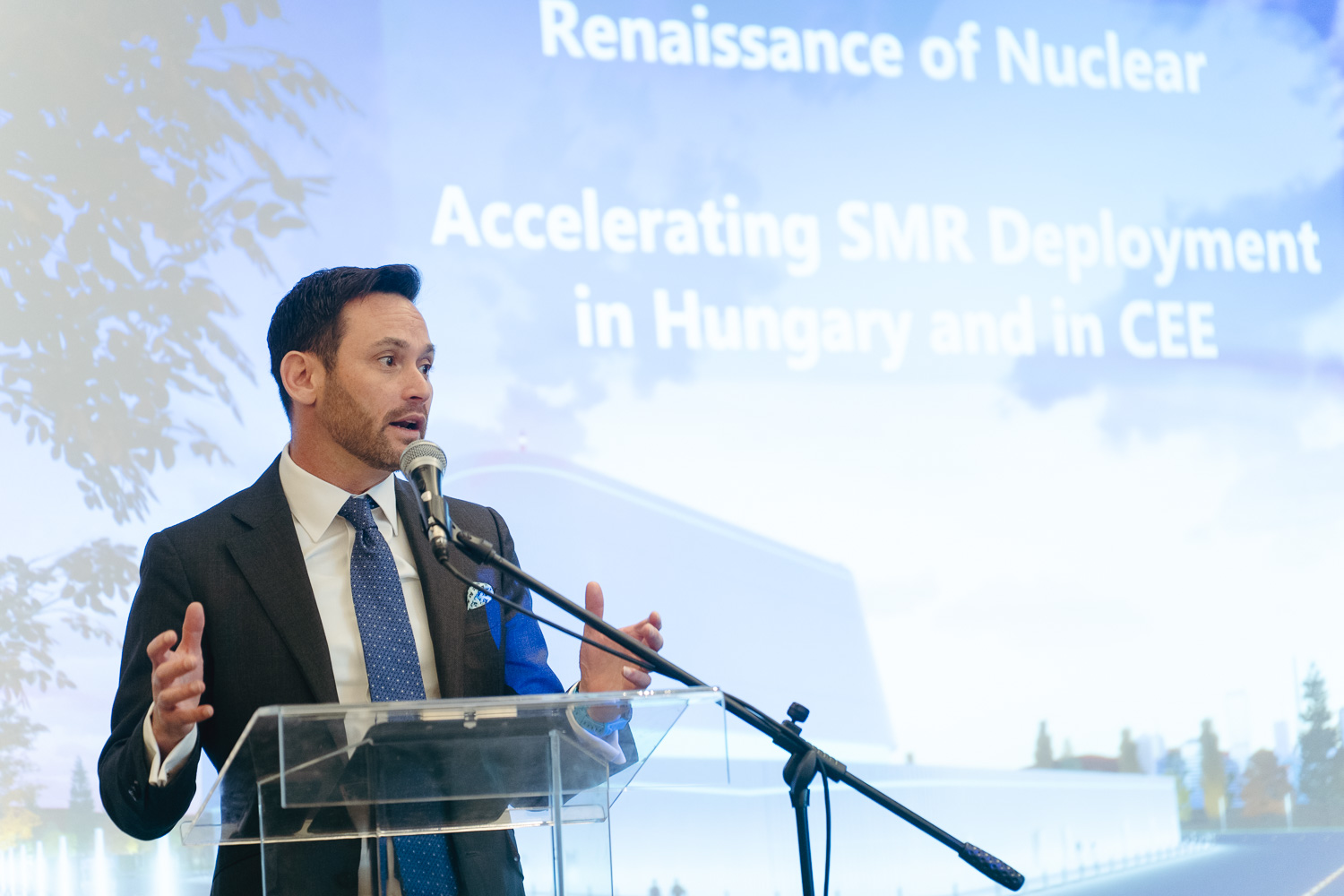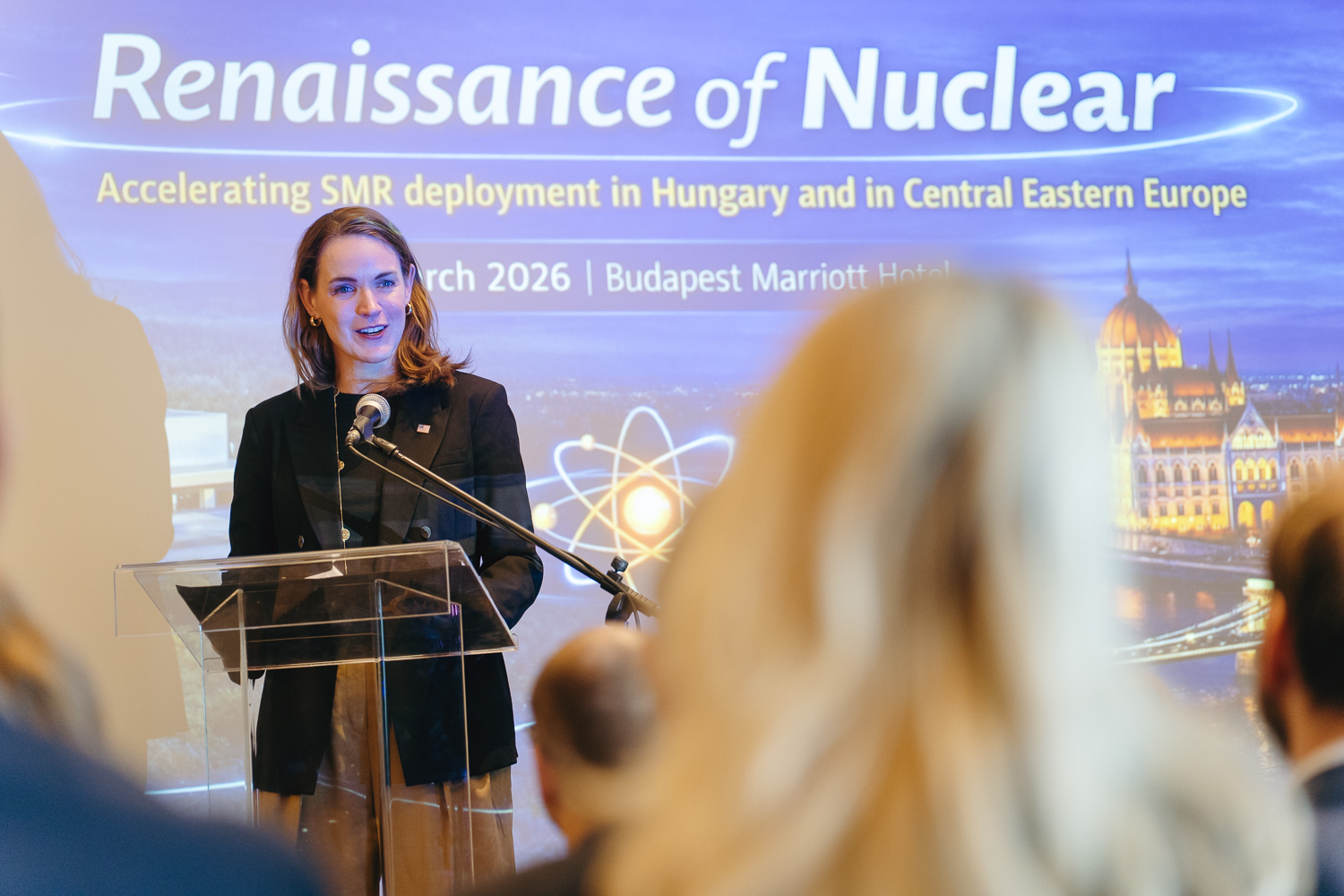
Budapest – Policymakers, regulators, and industry leaders gathered today at the “Renaissance of Nuclear – Accelerating SMR Deployment in Hungary and in Central and Eastern Europe” forum to discuss the commercial outlook of small modular reactors (SMRs), their role in ensuring energy security, and their contribution to decarbonisation in Hungary and across Central and Eastern Europe. The event highlighted Hungary’s growing role in the next wave of nuclear energy development in the region.
Strategic momentum for SMR deployment
The event comes at a pivotal moment for the Hungarian nuclear sector, following the recent U.S.–Hungary Civil Nuclear Intergovernmental Agreement, setting the stage for cooperation in civilian nuclear energy between the two countries, and the EU Commission’s SMR Strategy. Together, these developments are positioning Hungary as a potential regional hub for the deployment of advanced nuclear technologies.
In her opening remarks, Caroline Savage, Chargé d’Affaires at the U.S. Embassy in Budapest, emphasised the importance of U.S. – Hungarian cooperation and the role of American nuclear technology in strengthening energy security in the region. “The US sees Hungary as a key partner for nuclear energy in the region, and Hungary was selected for a phase one FEED study, for pre-construction activities for the deployment of SMRs.”
Regarding the global energy landscape and the role of nuclear energy in ensuring long-term energy security and system stability, Attila Aszódi, Nuclear Safety Expert and Dean of the Faculty of Natural Sciences at the Budapest University of Technology and Economics, said: “Today the key question is how supply security can be ensured and how volatile electricity prices can be tackled. We are really in a new situation where new technologies are welcome and necessary, and SMRs play an important role.”
Last year SGE, European SMR development platform based in Warsaw, signed a Letter of Intent with HUNATOM, establishing a framework to assess the deployment of the BWRX-300 small modular reactor technology in Hungary. The company’s Chief Business Development Officer, Robert Rudich, underlined: “Hungary has the experience and capabilities to become a regional leader in the deployment of the BWRX-300. It brings together deep nuclear know-how and a strategic understanding of the role new nuclear will play in meeting growing energy demand, supporting industrial development, and enabling long-term economic growth. Together with GE Vernova Hitachi and our partners from HUNATOM, we believe the BWRX-300 can offer Hungary an accelerated pathway to new nuclear capacity. The economical and quick deployment of this world leading technology will support industrial expansion, create new investment opportunities, and keep pace with rising energy needs.
On Hungary’s energy strategy and the role of SMRs in achieving national climate and energy policy objectives, Márk Alföldy-Boruss, Deputy State Secretary at the Ministry for Energy, stated:“Nuclear energy will be a key pillar of our energy strategy”, and “the Parliament has adopted an amendment to the Hungarian Atomic Energy Act to establish a governing framework for SMR deployment… There is a very big promise for SMRs in terms of delivering on time and on budget. We have fruitful international cooperation with all the relevant vendor countries.”
From a regulatory perspective, focusing on licensing frameworks and the safe deployment of new nuclear technologies, Andrea Beatrix Kádár, President of the Hungarian Atomic Energy Authority, highlighted: “The modification made it possible to take the necessary steps for licensing, and now we have the safety code phase ahead of us, defining the concrete requirements. SMRs represent a kind of leap in nuclear technology.. Conventional nuclear plants face several challenges, and SMRs can be an answer to these challenges.”
On the development of nuclear projects and the role of HUNATOM in advancing Hungary’s nuclear ambitions, Róbert Griljov, Member of the Supervisory Board of HUNATOM, stated: “Without nuclear energy, there is no chance of reaching the climate goals that the EU has set before us… HUNATOM has sufficient experience in project preparation and construction to transfer to SMR projects. This experience will provide an additional advantage and could accelerate the implementation of the technology.”
Speakers agreed that SMRs have the potential to play a critical role in meeting rising electricity demand, while enhancing energy independence and supporting climate targets in the region.
The event concluded with a shared commitment to continue dialogue and collaboration to turn strategic ambition into concrete projects in the coming years.